
Editorial Policy
Papers must be submitted with the understanding that they are currently being considered by another journal published by or by another publisher, nor have they been published anywhere else (except as an abstract or as part of an issued lecture or thesis). The submitting (corresponding) author is in charge of confirming that all other co-authors have given their approval for the article’s publication. Additionally, it is the writers’ duty to guarantee that publications originating from a certain university are submitted with the required institution’s approval. The date of receipt is only formally established and verified by an acknowledgment from the editing office. The authors must follow the work to be edited for readability for it to be submitted.
Concerning Authorship
Giving credit and delegating responsibility for intellectual activity is done explicitly through authorship. They are connected to one another. The degree to which authorship procedures accurately reflect contributions in the final output should be the basis for evaluation. The reputation, academic advancement, and grant funding of the individuals involved, as well as the strength and standing of their institution, are all impacted by authorship.
There are occasional disagreements over who should be identified as the authors of an intellectual work and in what sequence. The goodwill, efficacy, and reputation of the parties concerned as well as their academic community might suffer significantly when authorship disputes emerge.
A clear, early grasp of authorship norms that are held by the academic community as a whole may have prevented many of these disputes, which arise from miscommunication and misunderstanding among peers. We do not impose an order on the list of authors or mandate that every author of a research paper sign the letter of submission.
When a work is submitted to us, we assume that all of the above listed authors have approved its contents. Before and after publication, the corresponding (submitting) author is in charge of overseeing all correspondence between the journal and all co-authors and ensuring that this agreement has been reached.
A signed letter from each author is required to approve any changes made to the authors list after submission, such as rearranging the authors or adding or removing authors.
Minimum Standards for Writing
Every individual named as an author should be eligible for authorship, and each eligible individual should be tested. Each author needs to have contributed enough to the work to be held accountable for the relevant parts of the text. The integrity of the work as a whole, from conception to publication, should be the responsibility of one or more authors.
The only criteria for authorship credit should be:
- Significant contributions to design and conception, data collection, analysis, and interpretation, and ultimate approval of the published version.
The criteria must be met by the conditions mentioned above. Authorship is not justified by funding acquisition, data collecting, or general research group supervision alone.
Each author should describe what they contributed, and editors should publish their details. The Acknowledgments should list all non-authors who contributed to the work and provide a description of their contributions.
Minimum Standards for Recognition
Enumerate all contributors who don’t fit the requirements for authorship, for example a department chair who merely offered general support or someone who only offered technical or writing aid. It is also important to acknowledge material and financial support.
Under a heading like “clinical investigators” or “participating investigators,” groups of people who have made significant contributions to the paper but whose contributions do not warrant authorship must be listed. Their role or contribution should be described, such as “served as scientific advisors,” “critically reviewed the study proposal,” “collected data,” or “provided and cared for study.” Everyone must have provided written consent to be acknowledged since readers may assume that they support the data and findings.
Contributions from co-authors
It is highly recommended that authors write a remark at the end of the work that details each co-author’s real contribution. Two co-authors may be listed as having equally contributed to the study being discussed here.
Concerning Peer Review
We strive for quick publishing of excellent research while upholding a strict yet understanding peer review procedure. Two or more subject-matter experts will peer-review manuscripts (except from those that are inadequate quality or unlikely to be competitive enough for publication), and the authors will get a judgment within a month. Authors will be notified via email if a unique situation causes the review process to take longer than expected. Significant findings in a manuscript will be assessed and published as soon as possible. Potential choices about a manuscript are:
- Acknowledged as it is.
- Accepted following a little edit.
- Approved following a significant edit.
- Disregarded.
In the event that a small revision is needed, authors must provide a new version within a fortnight. Authors must return a corrected version within 25 days if a significant revision is needed.
Concerning Duplicate Publications
Submissions to us must be unique, unpublished, and not intended for publication elsewhere. When submitting a contribution to us, authors who have relevant work under consideration or in press elsewhere should upload a properly marked copy at the time of submission and include it in their cover letter. An author must include information in the cover letter if a portion of a contribution they want to submit to us has already appeared or will appear elsewhere. We may take it into consideration if the other work’s primary finding, conclusion, or ramifications are unclear. There are other considerations, such as if the other work was published in a language other than English.
If an author reuses any portion of the paper, such as a figure or figures, that has been published elsewhere or is protected by copyright, they must obtain permission from the previous publisher or copyright holder.
The editors honestly believe that their journals are fully authorized to print all of the submitted content, including graphics.
Concerning Plagiarism
The act of duplicating someone else’s words or ideas and passing them off as one’s own unique work is called plagiarism. Reutilizing meaningful portions of one’s own published work without giving due credit is called duplicate publication, also known as self-plagiarism. This can include getting the same research published in several publications or having authors add a little bit of fresh information to an earlier work.
When significant portions of material are copied and pasted, it is evident that plagiarism has taken place. Manuscripts of this type would not be accepted for publishing. However, little instances of plagiarism without malicious intent are rather common, such as when a writer repurposes portions of an introduction from a previous work. The editors will consider each instance on its own merits, whether they learn about it by reading about the literature or from their personal familiarity with it.
Product Category
-
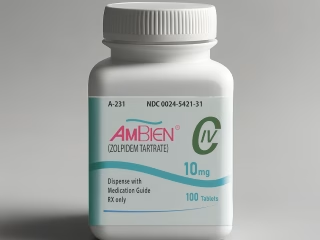 Buy Ambien Online
 -
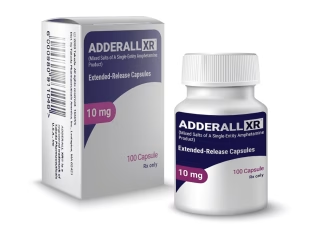 Buy Adderall Online
 -
 Buy Adipex Online
 -
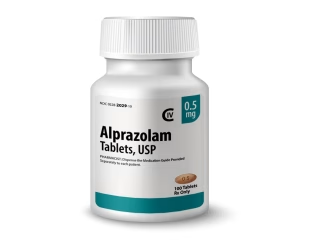 Buy Alprazolam Online
 -
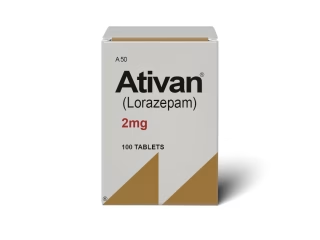 Buy Ativan Online
 -
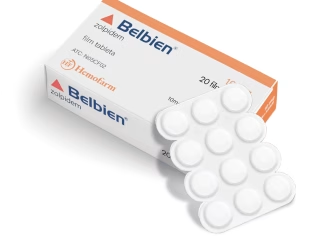 Buy Belbien Online
 -
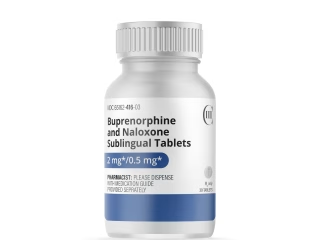 Buy Buprenorphine Online
 -
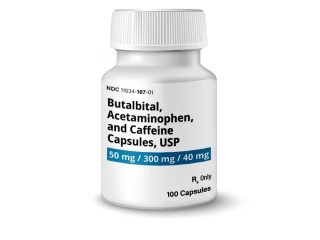 Buy Butalbital Online
 -
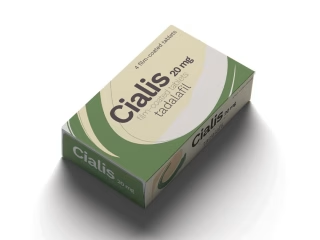 Buy Cialis Online
 -
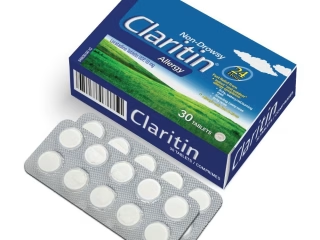 Buy Claritin Online
 -
 Buy Clonazepam Online
 -
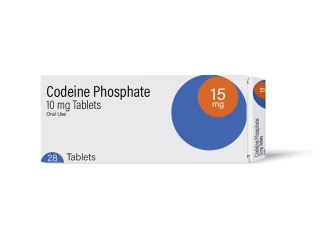 Buy Codeine Online
 -
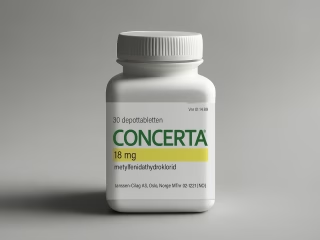 Buy Concerta Online
 -
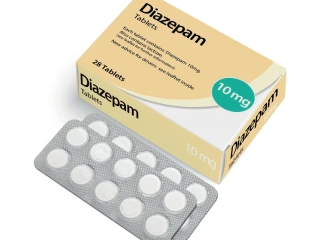 Buy Diazepam Online
 -
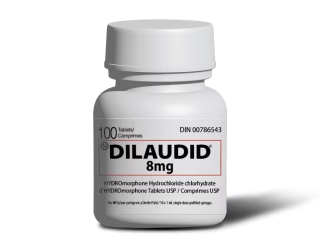 Buy Dilaudid Online
 -
 Buy Farmapram Online
 -
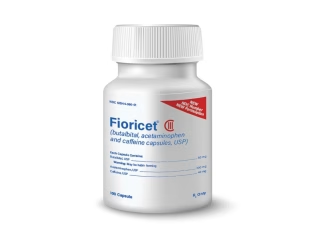 Buy Fioricet Online
 -
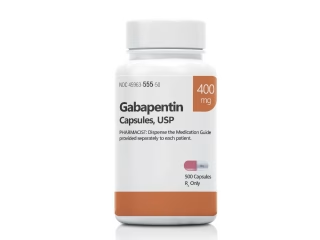 Buy Gabapentin Online
 -
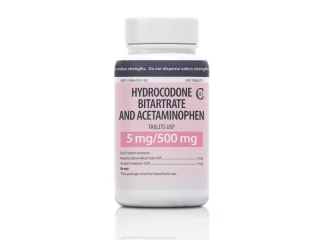 Buy Hydrocodone Online
 -
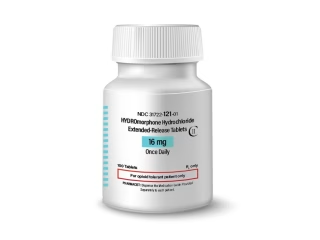 Buy Hydromorphone Online
 -
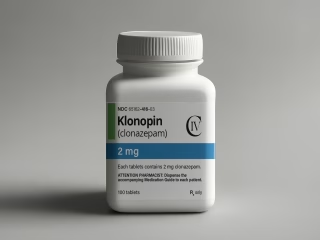 Buy Klonopin Online
 -
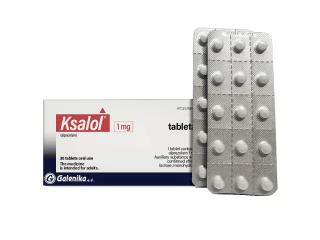 Buy Ksalol Online
 -
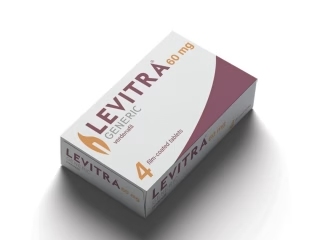 Buy Levitra Online
 -
 Buy Lorazepam Online
 -
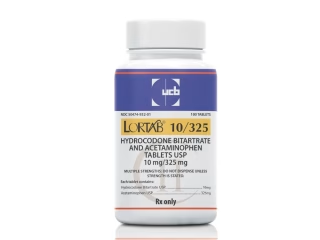 Buy Lortab Online
 -
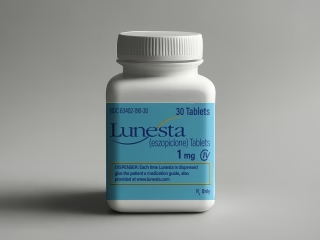 Buy Lunesta Online
 -
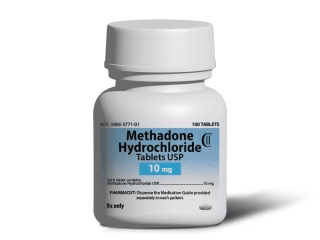 Buy Methadone Online
 -
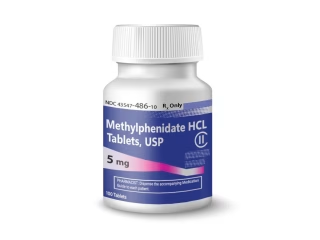 Buy Methylphenidate Online
 -
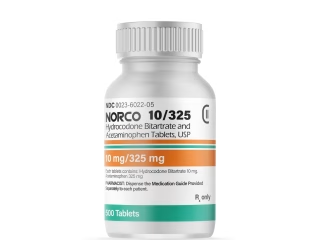 Buy Norco Online
 -
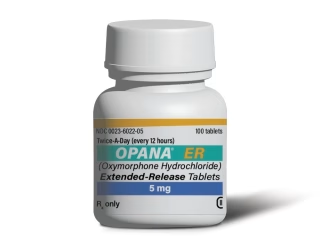 Buy Opana ER Online
 -
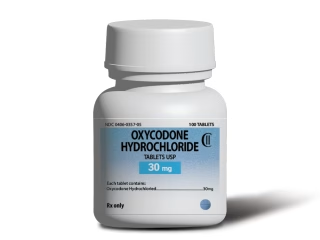 Buy Oxycodone Online
 -
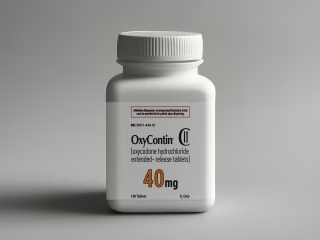 Buy Oxycontin Online
 -
 Buy Oxymorphone Online
 -
 Buy Percocet Online
 -
 Buy Phentermine Online
 -
 Buy Pregabalin Online
 -
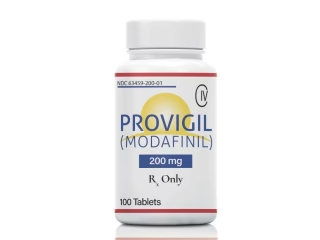 Buy Provigil Online
 -
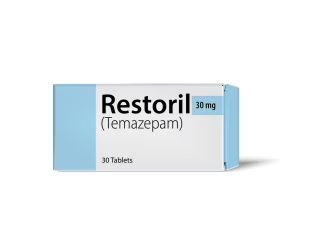 Buy Restoril Online
 -
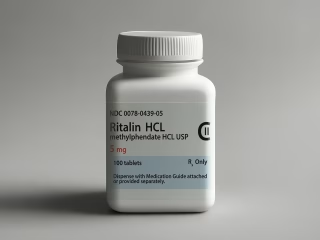 Buy Ritalin Online
 -
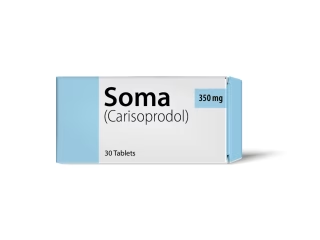 Buy Soma Online
 -
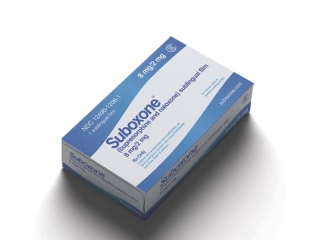 Buy Suboxone Online
 -
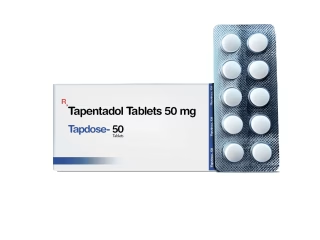 Buy Tapentadol Online
 -
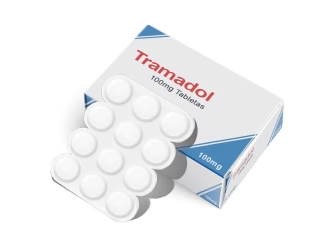 Buy Tramadol Online
 -
 Buy Valium Online
 -
 Buy Viagra Online
 -
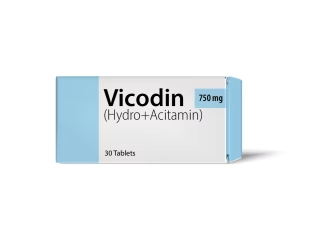 Buy Vicodin Online
 -
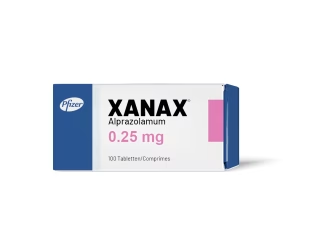 Buy Xanax Online
 -
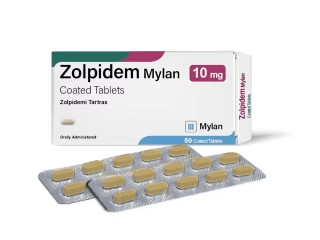 Buy Zolpidem Online